
In an increasingly competitive academic landscape, parents across India are constantly searching for ways to give their children an early edge in cognitive growth. While digital tools and smart devices dominate modern learning, one of the most effective methods for mental development remains thousands of years old: the Abacus.
From metro cities like Mumbai and Bengaluru to tier-2 and tier-3 towns, Abacus academies have become a staple enrichment activity for young learners. But what makes this traditional counting tool so powerful, when should a child begin, and how exactly does it shape a growing brain?
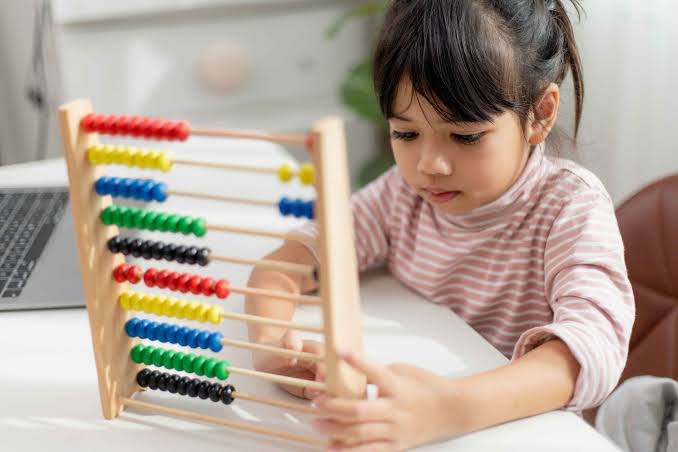
What is the Minimum Age Required to Start Abacus Learning?
Most Abacus training institutes in India recommend a minimum age of 4 to 5 years.
While children can enrol up to 13 or 14 years old, starting between 4 and 7 years is considered the ideal sweet spot.
Prerequisites Before Starting
Before enrolling a child, they don’t need advanced math skills, but they should possess a few basic readiness traits:
- Basic Number Recognition: Ability to identify numbers from 0 to 9.
- Fine Motor Skills: Ability to hold and physically shift small beads on the tool.
- Attention Readiness: Capability to sit and follow simple instructions for 30–45 minutes.
Why Is Abacus Training Crucial for Brain Development?
Many parents assume Abacus is strictly a “fast math” or mental calculation trick. In reality, arithmetic is simply the medium—whole-brain stimulation is the true goal.
1. Dual-Hemisphere (Whole-Brain) Activation
Standard formal schooling heavily relies on the left hemisphere of the brain, which processes logic, numbers, sequence, and analytical tasks.
Abacus learning bridges this gap by activating both hemispheres simultaneously:
- Left Brain: Decodes numbers, formulas, and logical step sequences.
- Right Brain: Visualizes the movement of beads, spatial positions, and color representations.
By coordinating both hands to move beads while calculating, neural pathways across both hemispheres are rapidly strengthened during peak developmental years.
2. Transition from Physical Tool to “Mental Abacus”
As children progress through structured Abacus levels, they move away from the physical frame. They are taught to build an imaginary, visual abacus inside their minds.
Moving invisible beads at high speeds fosters:
- Photographic Memory: Kids mentalize bead positions as visual snapshots rather than abstract numbers.
- Increased Working Memory Capacity: Remembering multi-digit sequences and calculations boosts memory recall across other subjects like language and science.
3. Hyper-Focus and Listening Concentration
To solve rapid-fire mental arithmetic problems, a child must listen attentively to numbers spoken in quick succession and perform instantaneous mental moves. This trains sustained attention and listening comprehension, building a deep focus habit that directly improves general classroom performance.
4. Overcoming Math Anxiety and Building Confidence
Mathematics is one of the most common sources of academic anxiety among young students. Abacus turns abstract numbers into a tangible, playful, and visual game. When children calculate multi-digit arithmetic faster than an adult with a calculator, their self-belief skyrockets, instilling lifelong confidence.
Age-Wise Benefits at a Glance
| Age Group | Primary Focus & Developmental Gain |
| 4 – 6 Years (Foundation) | Number sense, fine motor coordination, sensory bead play, early focus habits. |
| 7 – 10 Years (Core) | Rapid speed & accuracy, mental visualization, elimination of finger counting. |
| 11 – 14 Years (Advanced) | High-level problem solving, exam stress reduction, competitive speed. |
Final Thoughts for Parents
The human brain grows at its fastest pace during early childhood. Introducing your child to Abacus training around age 4 to 5 takes advantage of this natural period of brain plasticity. Far beyond just making your child a human calculator, Abacus equips them with sharp concentration, strong visualization skills, and analytical confidence that will benefit them across all aspects of life.